Beautiful Plants For Your Interior
Beautiful Plants For Your Interior

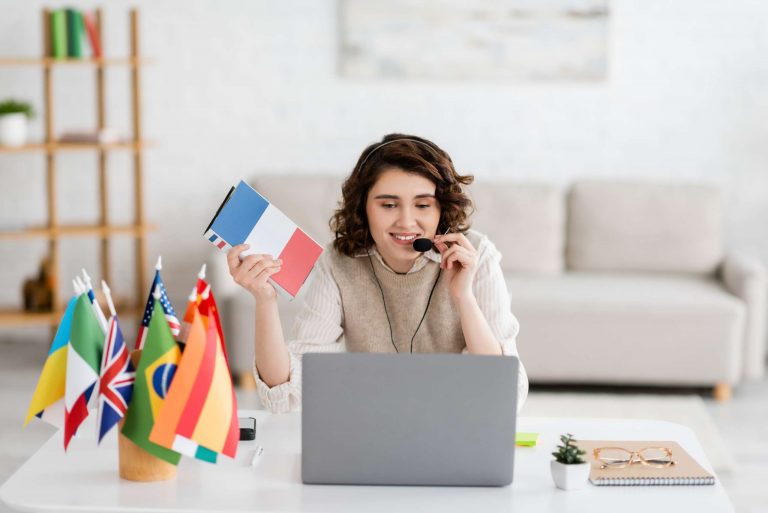
Most people study French for the very practical reason that it’s a useful skill to have — maybe for a trip, maybe for work, maybe for school. But no one tells you that learning French will fundamentally alter the way you communicate — and think — in any language. It’s a language that has been honed over hundreds of years of logic, diplomacy, poetry, and prose. And the more you learn, the more logically you’ll think — and the more finely you’ll be able to slice a Brie, of course.
What is even more intriguing is the alteration in the process of thought organization. In French, there are times when you have to think ahead and consider word agreement and tense usage. This process enhances the ability to think critically and logically. As the weeks progress, you begin to compose these elaborate thoughts in French rather than translating your thoughts. Your thought process is eventually transformed so that your brain functions in French as well, providing you with a second method of thinking and communicating.
Lastly, learning a new language can alter your perspective through the use of authentic resources, such as movies, articles, podcasts, and conversations, which often reveal cultural values and norms. The French, for example, are big on discussion, critical thinking, and verbiage, which can foster a more mindful approach to communication. Humor, sarcasm, and principles of politeness vary from language to language, which helps you learn to detect between the lines and gauge the tone for the situation. This sort of emotional sensitivity can be a useful asset wherever your international career takes you.
This is true also for confidence. The act of communicating in a foreign language teaches you to accept uncertainty and to risk embarrassment. With each conversation, you learn to become a little more durable and flexible. You may find that you are more comfortable expressing your ideas and opinions in professional and social situations. You may be more willing to ask for clarification when needed. As you become accustomed to the process of formulating and voicing your thoughts in French, you are likely to become more proficient at doing so in English.
Finally, the benefit of French learning isn’t just about knowledge, it’s about brain function and cultural broadening. It gives you new perspective, creative avenues, and relationship building opportunities. Beyond just the change of your ability to communicate, it fundamentally changes the way you look at, process, and react to information. For some, this is the best by-product of all — a lifestyle change that lasts long after the first fluent conversation.